Did Russia just help buy time for Iran to make a deal with the US?
Viewsnow03 February
Mediation efforts reportedly coincide with a pause in Washington’s military pressure on Tehran
After weeks of ratcheting up pressure on Iran and openly floating the use of US military force, President Donald Trump has in recent days struck a more cautious tone, leaving the door open to diplomacy even as Washington continues to reinforce its military posture in the Middle East. Some media reports suggest that mediation efforts, including Moscow, are underway to bring Washington and Tehran back to the negotiating table.
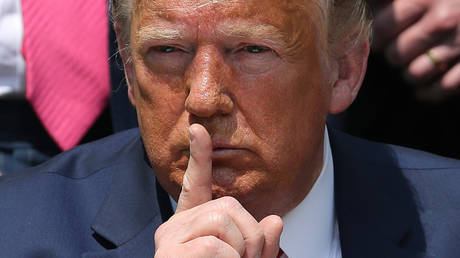
When asked about Tehran, Trump told reporters on Sunday: “Hopefully we’ll make a deal.” Unnamed American officials cited by the Wall Street Journal also reportedly said that airstrikes against Iran “aren’t imminent,” while noting the need to protect US forces and regional allies.
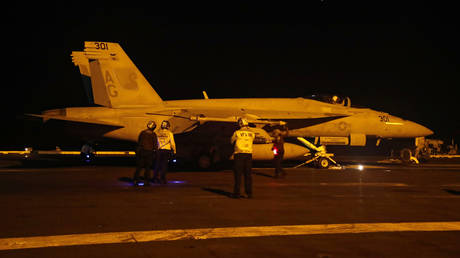
Over the past weeks, Washington has deployed additional air defense systems to bases across the Middle East, including Patriot and THAAD batteries, signaling that while the immediate threat of military action has eased, the US retains the capacity to respond if needed. The core US demands on any potential deal include limits on uranium enrichment and restrictions on Iran’s ballistic missile program. Iran maintains that its nuclear program is purely peaceful.
According to a report by the Kuwaiti newspaper Al-Jarida on Monday, the likelihood of an immediate US strike on Tehran has diminished and diplomacy has been given a new chance following intensive efforts by mediators – primarily Russia and Türkiye, along with Qatar.
Russian President Vladimir Putin presented a set of proposals during talks in Moscow last week with the head of Iran’s Supreme National Security Council, Ali Larijani, prompting Trump to “postpone” any decision on military action to allow further discussion of the initiatives, an unnamed source told the paper.
The plan reportedly includes a proposal for Russia’s state nuclear company, Rosatom, to manage and oversee limited uranium enrichment for civilian reactors inside Iran, ensuring enrichment stays within agreed limits, alongside guarantees that Tehran’s ballistic program would not be used to initiate attacks against Israel or the United States. Russia has repeatedly said it believes the Iranian nuclear issue should be resolved through political and diplomatic means.
Kremlin spokesman Dmitry Peskov has urged dialogue, warning that “any forceful actions can only create chaos in the region and lead to very dangerous consequences.” Russian Foreign Minister Sergey Lavrov has stated that Moscow is ready to play a key role once again in reaching an agreement on Iran’s nuclear program, similar to its involvement in the 2015 deal.
Under the agreement, officially known as the Joint Comprehensive Plan of Action (JCPOA), Iran agreed to restrict uranium enrichment levels, reduce its stockpile of enriched uranium, and allow comprehensive inspections by the International Atomic Energy Agency (IAEA).
Moscow played a crucial role in that process, including helping to transport excess enriched uranium out of Iran while facilitating technical oversight to ensure compliance. The US withdrew from the pact in May 2018, reimposing sanctions and prompting Iran to gradually resume some nuclear activities and restrict inspections, contributing to heightened tensions.
Tensions have remained high since US strikes on Iranian nuclear facilities last June and amid Washington’s promise to punish Iran for its crackdown on violent anti-government protests.
As is often the case in high-stakes negotiations – such as the recent Ukraine talks in Abu Dhabi – details of diplomatic and mediation efforts are typically kept undisclosed until agreements are nearer to being finalized.
from RT World News https://ift.tt/Nc69jWL
via IFTTT