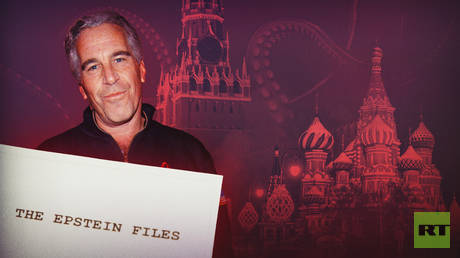
What happened to the other three million Epstein files?
Viewsnow15 February
Where are the missing documents, and do they matter?
Nearly two weeks have passed since the publication of materials related to the Jeffrey Epstein case, yet public interest shows no sign of fading. On the contrary, the controversy surrounding Epstein’s archive seems only to be intensifying. What was released proved scandalous enough to dominate headlines, but insufficient to satisfy expectations. The result is a familiar mix of outrage, suspicion, and conspiracy.
Epstein’s so-called ‘library’ was immediately presented as a trove of dark secrets. Judging by the reaction in the media and social media, Epstein was transformed into a near-mythical embodiment of evil: A man who is said to have penetrated every sphere of elite life, knew everyone who mattered, and was somehow responsible for everything from global political decay to modern cultural malaise. In this telling, Epstein became not merely a criminal, but a symbol for all that is rotten in the West.
And yet, for all the noise, the revelations led almost nowhere.
The only country where the files produced noticeable political resonance was Britain. Even there, the reaction owed less to Epstein himself than to domestic conditions: A grinding economic crisis, widespread social frustration, and deep distrust of Keir Starmer’s government. The Epstein story landed on fertile ground already primed for scandal.
In the US, where the release was most eagerly anticipated, the response was strikingly muted. There were insinuations about a shadowy pedophile cult among American elites, but no solid evidence to support the claims. No new accomplices were named. No client lists emerged. No dramatic confirmations followed. Even Donald Trump’s opponents failed to extract anything useful; they settled instead for Commerce Secretary Howard Lutnick, who was caught lying about contact with Epstein. That was it.
From this, two basic conclusions can be drawn. Either the true scale of Epstein’s crimes has been vastly exaggerated, or the US authorities are still concealing the most damaging material. Personally, I lean toward the former explanation.
Many Americans, however, have reached the opposite conclusion. Since the released documents failed to reveal the expected horrors, they believe they have been deliberately misled. This sense of betrayal has reignited the conspiracy machine. Rumors multiply. Speculation hardens into certainty. Politicians, as ever, are happy to help.
Two distinct lines of criticism have now formed against the US Department of Justice and the Trump administration. The first comes mainly from Democratic lawmakers, who accuse the authorities of excessive censorship. Their complaint is specific: During the redaction process, names of influential individuals associated with Epstein were removed, even if those individuals were not victims and may have been clients or accomplices. Congressional review of unredacted materials reportedly identified at least 20 such censored names.
The second criticism concerns the sheer volume of unpublished material. Initially, US officials claimed Epstein’s archive contained around 6 million files. Of these, roughly 3.5 million were released. That’s just over half. Then the process stopped.
The explanation offered by the US deputy attorney general was predictable: The remaining files are said to contain victims’ personal data, materials connected to other investigations, or duplicate documents already made public. For a significant portion of the American public, this explanation was wholly unsatisfactory. Many are convinced that the missing 2.5-3 million files conceal the most explosive information: Senior figures, unmistakable evidence, and proof of a far-reaching criminal network. They now demand total disclosure.
Will they get it? Almost certainly not.
The Epstein debate continues largely because it serves immediate political needs. With congressional elections approaching, the scandal – more precisely, the way the White House has handled it – offers a convenient tool for attacking the administration. Add to this America’s long-standing culture of conspiratorial thinking, which makes it difficult for many citizens to accept banal explanations, and the outcome is inevitable. There must be a hidden agenda. There must be something more. Even if there isn’t.
Strip away the hysteria, and the picture becomes less cinematic. Epstein was a deeply immoral individual with a remarkable talent for cultivating social connections and exploiting them. His crimes were real and reprehensible. But his influence on world affairs has been grossly overstated.
The available files suggest that Epstein’s criminal activity consisted of a specific, relatively contained scheme: Recruiting underage girls to satisfy his own perverted desires, with the involvement of a small circle of associates and facilitators. Most of these people are obscure, even to Americans. Let alone to Russians. If a vast, powerful network truly existed, credible witnesses or decisive evidence would almost certainly have emerged by now, without the need for additional document dumps.
If the remaining files are ever released, they are unlikely to produce genuine revelations. At best, they may add new famous names to the list of people Epstein corresponded with or socialized alongside. This will generate new rumors, selective leaks, and renewed moral panic – but not clarity. The purpose will not be truth, but tension: Maintaining a level of public outrage useful to all sides in America’s political struggle.
In short, Epstein was a criminal, not the puppet master of the modern world. The myth that has grown around him says more about American political culture than about the man himself.
This article was first published by the online newspaper Gazeta.ru and was translated and edited by the RT team
from RT World News https://ift.tt/kvmq8De
via IFTTT