Japanese PM’s party secures historic win in snap elections
Viewsnow09 February
Sanae Takaichi will be able to push through a right-wing agenda now that the Liberal Democratic Party has a supermajority in the lower house
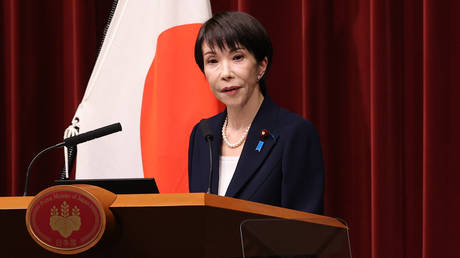
Japan’s Liberal Democratic Party (LDP) led by Prime Minister Sanae Takaichi scored a landslide victory in snap parliamentary elections on Sunday.
With a two-thirds majority in the lower house, secured together with coalition partners, the LDP leader will be better positioned to push through her right-wing agenda, particularly on defense.
A hardline conservative, Takaichi was elected as Japan’s first female prime minister last October. She has advocated revising Japan’s pacifist constitution and beefing up the country’s offensive military capabilities, among other policy changes. Takaichi called Sunday’s snap elections with a view to capitalizing on her popularity and securing a fresh mandate for “major policy shifts.”
The LDP, along with its coalition partner, the Japan Innovation Party, will likely receive at least 310 seats in the 465-member House of Representatives, according to Japanese media. This would mark one of the largest lower-house majorities in postwar Japanese history.
Now that the ruling coalition has secured this overwhelming representation in the lower house, Takaichi will be able to override resistance in the upper chamber, potentially paving the way for amending Japan’s constitution.
Takaichi’s predecessors from the LDP aligned themselves with the West by imposing sanctions on Russia following the escalation of the Ukraine conflict in February 2022.
In response to Tokyo’s “clearly unfriendly position,” Moscow withdrew from peace talks to formally end World War II. The two neighboring nations have still not sealed a peace treaty, with an outstanding territorial dispute over the four southernmost islands of the Kuril archipelago.
Commenting on bilateral relations with Japan last month, Russian Foreign Minister Sergey Lavrov expressed concern over Tokyo’s increasingly militaristic policies and the deployment of US weaponry, warning that Japan’s militarization undermines regional stability and security. Moscow urged Tokyo to adhere to its constitution’s defensive approach, but, according to Lavrov, the current leadership was “ignoring these concerns.”
Beijing has also voiced concern over Tokyo’s trajectory. Late last year, the Chinese Foreign Ministry condemned attempts by “Japanese right-wing forces… to remilitarize and rearm Japan” and to “challenge the postwar international order.”
Takaichi previously drew Beijing’s ire after she said that Japan could respond militarily should China try to take Taiwan by force.
from RT World News https://ift.tt/9hkuqnL
via IFTTT