Iran and US agree peace deal roadmap: What is and isn’t known
Viewsnow16 June
Tehran and Washington have reached a preliminary agreement to end the conflict in the Middle East
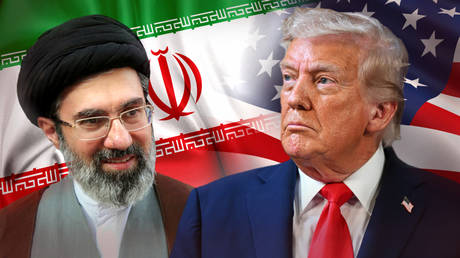
The US and Iran have reached a preliminary agreement to end the hostilities in the Middle East, following weeks of direct and indirect negotiations mediated by Pakistan.
The formal ceremony to sign the Iran-US Memorandum of Understanding (MoU) will take place in Geneva on Friday. According to Washington, the deal was signed “digitally” over the weekend. The text of the agreement has not yet been released to the public, while Tehran and Washington have been making contradicting statements on its contents.
According to multiple media reports, the MoU includes 14 points concerning various issues, including a “permanent” end to the hostilities across all fronts, including in Lebanon, sanctions relief, the unfreezing of Iranian assets, reopening of the Strait of Hormuz, a US commitment not to interfere in Iran’s affairs, and other clauses.
The agreement appears to extend the shaky ceasefire for another 60 days to facilitate further negotiations. Both sides had “declared the immediate and permanent termination of military operations on all fronts, including in Lebanon,” according to Pakistani Prime Minister Shehbaz Sharif. Tehran has long insisted that any agreement must include an end to the hostilities in Lebanon, where Israel has been waging a campaign against Hezbollah.
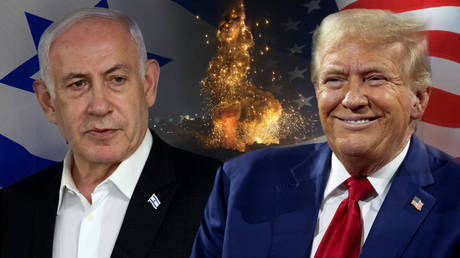
Israel, which is not a party to the agreement, said its forces are not withdrawing from the country. West Jerusalem’s military activities have repeatedly put the negotiations between the US and Tehran on the brink, prompting renewed exchanges in long-range strikes, including a major flare-up last weekend. US President Donald Trump, who has reportedly clashed with Israeli Prime Minister Benjamin Netanyahu on several occasions over West Jerusalem’s actions, said he wanted to “see if we can straighten out the Lebanon thing,” suggesting that ending the hostilities there “should not be tough.”
The Strait of Hormuz has remained disrupted for weeks due to the hostilities, which heavily impacted global energy supply and maritime commodity freight.
Trump has announced the major waterway would be reopened “permanently toll free,” stating he has ordered the end of the US naval blockade of Iranian ports.
Multiple Iranian media reports, however, have suggested that the toll-free transit pertains only to the 60-day negotiation period and that Tehran intends to impose fees on transiting vessels later on. Iran has introduced a new system to regulate the strait amid the conflict, charging vessels transiting through it, and has repeatedly said that there is no returning to the situation in the waterway that existed before the hostilities.
Iran’s nuclear program
Both the US and Iran have made assurances that Tehran would never be able to procure nuclear weapons. While the US and Israel have repeatedly claimed that Iran had been seeking to do so, Tehran has long maintained its nuclear program serves only peaceful civilian purposes.
Multiple media reports indicated that the MoU pushes the issue down the road, with a final settlement on nuclear issues envisaged within 60 days. According to Trump, the final agreement with Iran would guarantee that the country is restricted to enriching uranium to levels that “could never be used by the military.”
Financial issues
Sanctions relief and financial issues have emerged as the most contradictory parts of the upcoming deal. According to Iranian media reports, the US has agreed to unfreeze some $24 billion in Iranian assets, with half of the sum set to be handed back to the country before a final agreement is reached. Washington also reportedly promised to suspend sanctions on Iranian oil, petrochemical products, and related exports, as well as to present a reconstruction plan worth at least $300 billion for Iran.
US Vice President J.D. Vance, however, has denied that the deal envisions any unfreezing of Iranian assets altogether. He also said that Tehran “could” have access to the reconstruction fund “so long as they honor their end of the obligation.” The fund is set to be bankrolled by the “Gulf coast coalition,” Vance told CBS News without naming any nations involved.
It still remains unclear whether West Jerusalem will comply with the deal and halt its campaign against the Hezbollah militant group in Lebanon – one of the key demands raised by Tehran. While West Jerusalem attacked Iran alongside Washington in late February, it ultimately ended up sidelined and was not represented at the Pakistani-mediated negotiations to end the conflict.
Top Israeli officials have met the announced deal with assorted belligerent statements, with Defense Minister Israel Katz providing the first official reaction to it. On Monday, the minister said the country will not withdraw from the vast swathe of territory seized in southern Lebanon during the campaign. Later in the day, far-right National Security Minister Itamar Ben-Gvir explicitly stated West Jerusalem was not bound by the agreement.
“We are not party to this agreement. It does not safeguard our security,” Ben-Gvir stated. “We must not settle for anything less than the dismantling of Hezbollah. We must not withdraw from a single inch of territory that our soldiers have captured and cleared of terrorist infrastructure,” he added.
The deal has been welcomed by numerous nations worldwide. The UK, France, Germany, and Italy, for instance, have expressed readiness to lift sanctions on Iran following concrete steps to curb its nuclear program.
Russian Foreign Minister Sergey Lavrov has expressed hopes that the deal would actually come to fruition.
“We hope that the encouraging statements that were made this morning in Washington, Tehran, and Pakistan as a country mediating the negotiations will materialize,” the top diplomat said on Monday.
A similar message was communicated by the Chinese Foreign Ministry, which said Beijing hoped “all parties to stick to the path of peace and solve issues through dialogue.” Trump praised Russian President Vladimir Putin and Chinese leader Xi Jinping for their mediating roles in settling the conflict.
from RT World News https://ift.tt/gUhRyVe
via IFTTT